Journal of Experimental Psychology: General · 2026
Toward a mechanistic understanding of false news sharing: Which interventions work best, for whom, and why
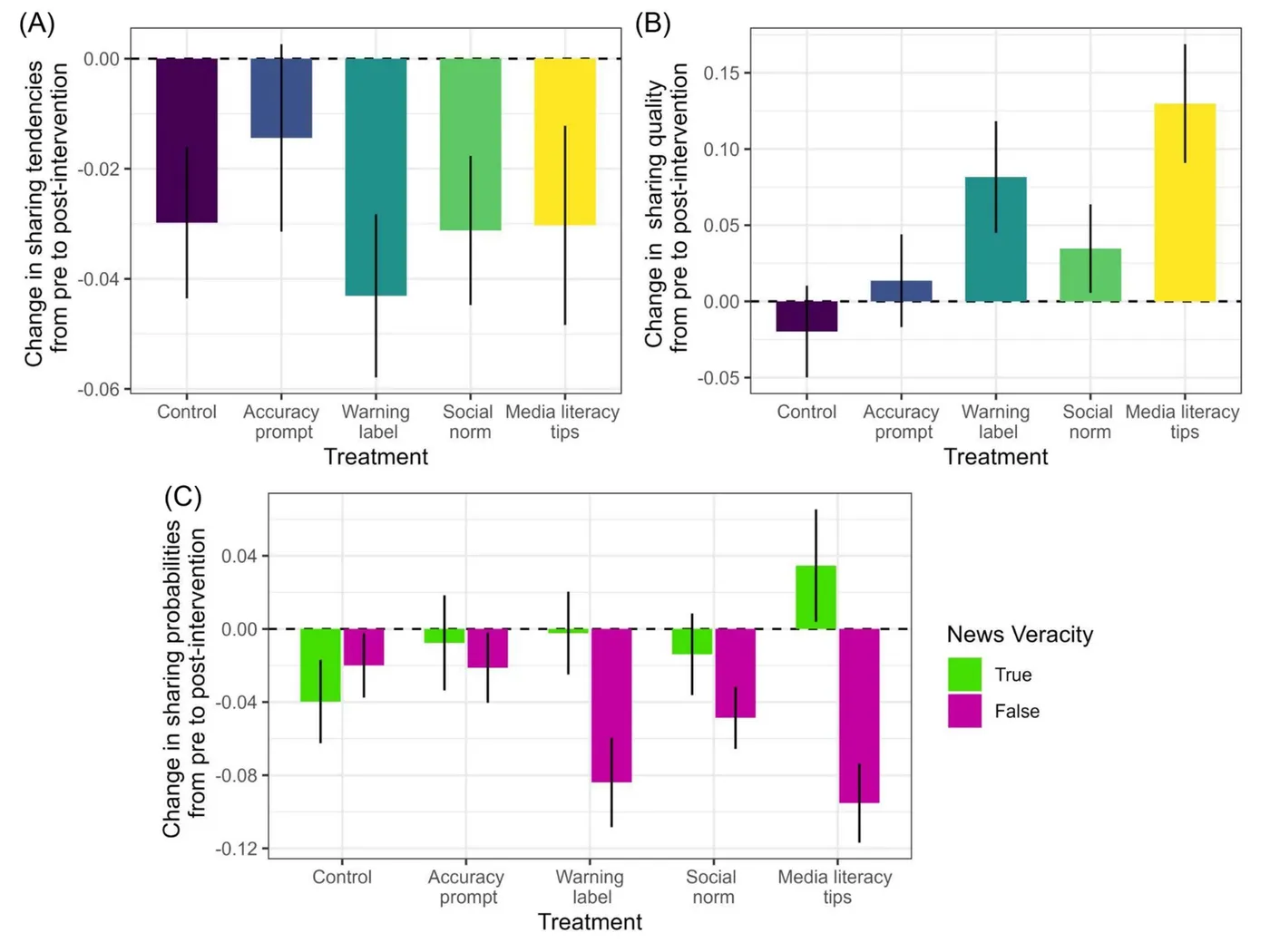
This study examines how to curb false news sharing, drawing on news-sharing decisions from over 1,100 U.S. participants. Comparing leading interventions head-to-head and using drift-diffusion modeling to uncover the decisions behind sharing, it finds that warning labels and media literacy tips substantially improve sharing quality, while social norm cues have a modest effect and accuracy prompts a very subtle one. These benefits hold broadly—even among at-risk groups like conservatives. Critically, each intervention works through a distinct cognitive pathway: warning labels shift people’s initial intentions away from sharing before they engage with content, whereas media literacy tips operate later, improving how news is processed and increasing caution before a decision. The findings clarify which interventions work best, for whom, and in which contexts.